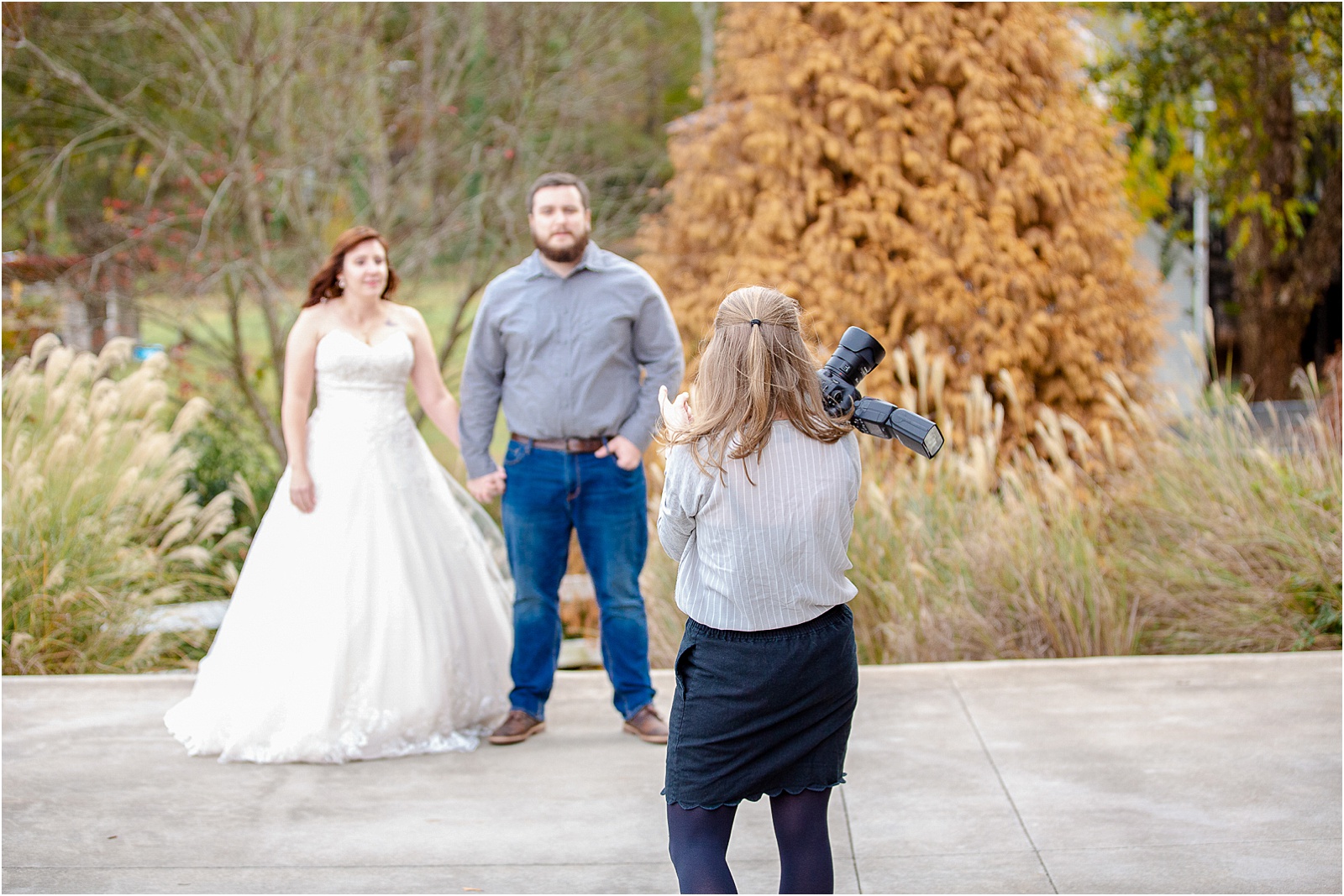
Every couple asks some version of this question, even if they don’t say it out loud: “What if something happens to our photos?” It’s a fair question — your wedding day photos are irreplaceable in a way almost nothing else you buy is. Here’s exactly how we protect them, from the moment we press the shutter to the day your gallery lands in your inbox.
Redundancy Starts With Two Photographers
Mitchel and I have shot almost every single wedding together since 2013 — over 200 of them across Upstate South Carolina. That’s not just about getting two angles of your first kiss (though that’s a nice bonus). It’s the first layer of backup. Two photographers means two separate camera systems, two separate memory cards, and two independent sets of files capturing your day. If one photographer’s gear had a problem, the other photographer’s coverage is still there.
Every Camera Writes to Two Memory Cards at Once
This is the part most couples don’t know to ask about, and it’s the single biggest technical safeguard in our workflow. Our cameras are set to write every single image to two memory cards simultaneously, in real time, as we shoot. If one card fails, gets corrupted, or is somehow lost, the second card has an identical copy of every photo. Nothing is ever captured to just one card.
This is standard professional practice, but it’s worth asking about if you’re interviewing photographers — not every photographer shoots this way, and it’s one of the questions on our list of questions to ask before booking.
Nothing Gets Deleted Until It’s Backed Up Three Times
Here’s our rule, and it doesn’t bend: a memory card from your wedding is never reformatted or reused until your images exist in at least three separate places. That typically looks like this:
- The original memory cards — kept untouched until the whole process below is complete
- Two independent hard drives — your images get copied to two separate physical drives, not just one, the same night or the following day
- Cloud backup — a third copy goes to offsite cloud storage, so even a fire, theft, or hardware failure at our studio can’t touch every copy at once
Only after all three copies are confirmed do we touch the original cards again. It’s slower than deleting and moving on, but it’s the reason we’ve never lost a wedding gallery in over a decade of doing this.
What Happens the Night After Your Wedding
We don’t wait weeks to back up your images — it happens almost immediately. Within a day or two of your wedding, your files are already copied across both hard drives and pushed to the cloud. This is also why we’re able to get a sneak peek of 100+ images onto our blog within days to weeks of your wedding — the files are already safe and already being edited.
From there, your full gallery is edited and delivered within eight weeks. Your online gallery becomes a fourth copy of your images, hosted separately from our own backup system, so even years down the road, your photos exist in multiple places you don’t have to think about.
Why This Matters More Than People Realize
We wrote our guide on what to do if your photographer cancels because we’ve talked to couples who’ve lived through wedding-day nightmares. Lost or corrupted photos are a quieter version of that same fear — and it’s one of the reasons we’re upfront about our process instead of just asking you to trust us blindly. You’re not just paying for two photographers on your wedding day. You’re paying for a system that’s been stress-tested over hundreds of weddings.
Frequently Asked Questions
What if a memory card fails during the wedding? Because every card is mirrored to a second card in real time, a single card failure never means lost images. We simply continue shooting on the working card and back up both once we’re off the clock.
How long do you keep our backup copies? We keep your gallery backed up for a full year after delivery, which is why we always encourage couples to download their full-resolution images and, ideally, order a printed album — nothing beats having a physical copy in your own hands.
Do you use the same backup process for engagement and bridal sessions? Yes — the same dual-card, three-copy system applies to every session we shoot, not just wedding days.
What made you build the process this way? A decade of shooting weddings teaches you that hardware fails eventually — it’s not a matter of if, it’s when. Building in redundancy at every step means a single failure, on any given Saturday, never turns into a missing gallery.
More from the blog
- My Wedding Photographer Canceled, What Do I Do?
- The Ultimate Guide to Choosing a Wedding Photographer in South Carolina
- The Upstate SC Wedding Day Timeline
Katie Jaynes Photography has photographed 200+ weddings across Upstate South Carolina since 2013, always with two photographers on every wedding day and a backup system built to match. If you have questions about how we protect your images, let’s talk.