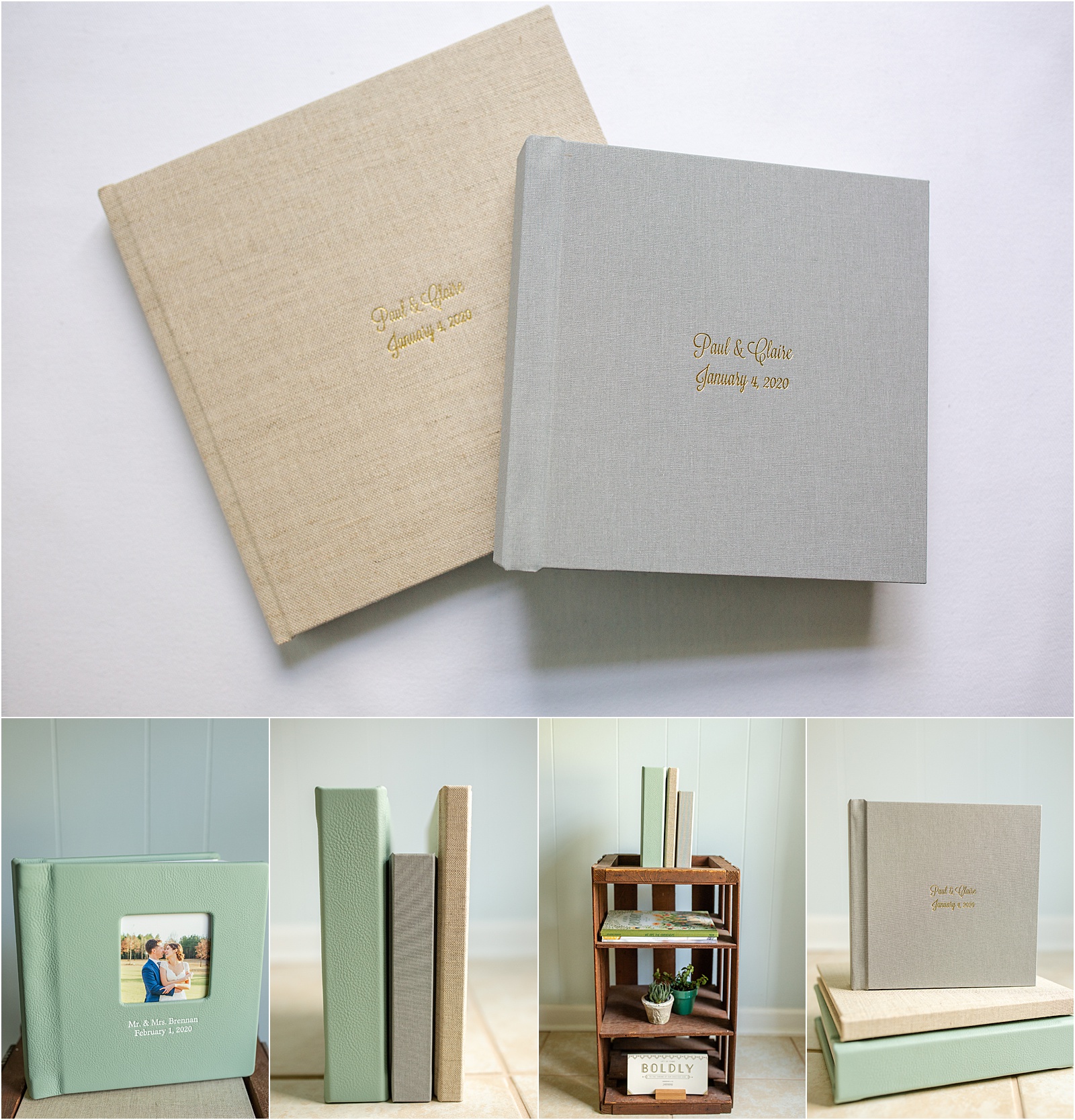
Wedding albums are one of the most underrated investments couples make — and one of the most regretted when skipped. Years after the wedding, couples who have an album look at it regularly. Couples who only have a digital gallery often don’t open it for months at a time. The album is the physical object that makes your wedding photos part of your daily life rather than a folder on a hard drive you’ll eventually forget to back up.
If you’ve never thought much about wedding albums, this guide covers what modern albums are, the different types, what they cost, and why we think every couple should have one.
What Is a Modern Wedding Album?
If you’re picturing your parents’ wedding album — a vinyl binder with 4×6 prints slid behind plastic sleeves — modern wedding albums are something completely different.
A professional wedding album today is a flush-mount, lay-flat book: thick, rigid pages with photographs printed directly onto the page (not inserted into sleeves), designed as a curated spread layout that tells the story of your day. The pages lay completely flat when opened, so images can span across two pages without a gap in the center. The covers are typically fine linen, leather, or vegan leather in a range of colors, often with your names or wedding date embossed.
These albums are built to last decades — the materials are archival, the printing is professional, and the construction is designed for regular handling. They’re meaningfully different from a photo book you’d order from a consumer print service.
Types of Wedding Albums
Main Wedding Album
The primary album for the couple — typically 10×10 or 12×12 inches, 20–30 spreads (40–60 pages), featuring the highlights of the full wedding day from getting ready through the reception. This is the heirloom you’ll keep on your coffee table or nightstand.
Parent Albums
Smaller versions of the main album — typically 8×8 inches — designed as gifts for parents or grandparents. They contain a curated selection from the main album, usually 10–15 spreads. These are among the most meaningful gifts you can give parents after the wedding, and they’re significantly less expensive than the main album.
Engagement Session Album
A smaller album from your engagement session, often 8×8 or 6×6 inches. A nice keepsake that captures that chapter of your story separately from the wedding day itself.
Why a Physical Album Matters
Screens Are Not How We Experience Memories
Your digital gallery is important — it’s your archive, your printing source, the file you’ll use to share images. But scrolling through 500 photos on a screen is not the same as turning the pages of a well-designed album that tells the story of your day in 80 images. One is a library; the other is a book you actually read.
It Becomes a Family Object
I grew up looking at my parents’ wedding album. Not because they made me, but because it was there and it was interesting. I knew those photos before I knew the stories. That album made their wedding day part of my childhood. Your album will do the same thing for the people who come after you — children, grandchildren, nieces and nephews who weren’t there and will never otherwise have a way to experience that day.
Digital Files Don’t Last Forever
Hard drives fail. Cloud services change their terms. Links expire. File formats become obsolete. The images stored on your photographer’s delivery platform won’t be there in 30 years. A physical album printed on archival materials will be. It’s not a reason to skip the digital gallery — it’s a reason not to rely on it exclusively.
It Curates Your Story
Your full gallery will have 400–700 images. Your album will have 60–100. The process of designing an album — selecting the images, sequencing them, building the layout — is an act of curation that forces you to identify which moments matter most. The result is a version of your wedding day that’s been thoughtfully edited, not just delivered in bulk.
What Does a Wedding Album Cost?
| Album Type | Typical Size | Typical Cost Range |
|---|---|---|
| Main wedding album | 10×10 or 12×12, 20–30 spreads | $800–$2,000+ |
| Parent album | 8×8, 10–15 spreads | $300–$600 |
| Engagement album | 6×6 or 8×8 | $200–$400 |
Albums ordered at the time of booking your photography package are almost always discounted — sometimes significantly. If an album is something you want, the best time to secure the price is before your wedding, not after.
When Can You Order an Album?
If you’ve already had your wedding and didn’t order an album, it’s not too late. We offer albums to past clients at any point after their wedding — whenever you’re ready. Parent albums also make exceptional Christmas or anniversary gifts. Reach out and we’ll walk you through the current options and pricing.
What to Look for in a Wedding Album
- Lay-flat pages — images should span the full spread without a gutter gap. If pages don’t lay flat, images are broken by the spine.
- Archival materials — ask your photographer what materials their album vendor uses. Albums built for longevity use acid-free materials throughout.
- Professional printing — album images should be printed at professional resolution, not consumer inkjet quality.
- Custom design — your photographer or a dedicated designer should lay out your album spread by spread, not auto-generate it from a template.
- Cover material and options — look for fine linen, leather, or vegan leather in colors that suit your aesthetic. Ask about embossing options for names and dates.
Frequently Asked Questions
Do I really need a wedding album if I have the digital files?
You don’t need one — but couples who have them consistently say it’s one of their best wedding decisions, and couples who skipped it often say it’s their biggest photography regret. The digital gallery and the album serve different purposes. One is an archive; the other is an heirloom.
How many photos go in a wedding album?
A typical main album has 60–100 images across 20–30 two-page spreads. The selection and sequencing is part of the design process — your photographer will typically present a draft layout for your review and approval before the album goes to print.
Can I order a wedding album years after my wedding?
Yes. As long as your photographer still offers albums and has access to your gallery files, you can order an album anytime. Pricing may differ from what you would have paid at booking, but it’s rarely unavailable. Reach out to ask about current album options.
What’s a parent album?
A smaller version of your main album — typically 8×8 inches — designed as a gift for parents or grandparents. It contains a curated selection of images (usually 10–15 spreads) and is one of the most meaningful gifts you can give after the wedding. Many couples order them for Christmas or the first anniversary.
Related: Why Bridal Detail Photos Matter | How to Pose for Wedding Photos | What Your Photographer Won’t Tell You
We offer wedding albums as part of our packages and would love to help you preserve your day beautifully. Learn more about our SC wedding photography services.